1. Me presento
6. Mi país y mi nacionalidad
Tu país de origen y nacionalidad marcan profundamente tu identidad, puesto que van a determinar tu cultura, tu idioma, tus costumbres y, probablemente, incluso tu raza y religión. Por esta razón, cuando decimos de dónde somos, usamos el verbo ser.
Your country of origin and nationality profoundly shape your identity, as they determine your culture, language, customs, and probably even your race and religion. For this reason, when we say where we are from, we use the verb ser (to be).
El verbo SER
The verb TO BE
|
Español
|
Inglés
|
|---|---|
|
¿De dónde eres (tú)?
|
Where are you from? (informal)
|
|
¿De dónde es (usted)?
|
Where are you from? (formal)
|
|
¿De qué país eres / es?
|
What country are you from? (informal/formal)
|
|
¿Cuál es tu / su país de origen?
|
What is your country of origin? (informal/formal)
|
|
¿Cuál es tu / su nacionalidad?
|
What is your nationality? (informal/formal)
|
|
Soy de España.
|
What is your country of origin? (informal/formal)
|
|
Soy español / española.
|
I am Spanish (masculine/feminine)
|
| Nombre Name |
Yo soy Isabel. Él es Marcos. |
I am Isabel. He is Marcos. |
|---|---|---|
| Nacionalidad Nationality |
Yo soy española. Él es guineano. |
I am Spanish. He is Guinean. |
| Sexo Sex |
Yo soy una mujer. Él es un hombre. |
I am a woman. He is a man. |
| Raza Race |
Yo soy blanca. Él es negro. |
I am white. He is black. |
| Religión Religion |
Yo soy católica. Él es musulmán. |
I am catholic. He is muslim. |
To learn more about the verb TO BE, click here.
Mira este vídeo de Sergi Martin Spanish para escuchar a diferentes personas hablando de dónde son y familiarizarte con el nombre de los países y sus nacionalidades.
Watch this video by Sergi Martin Spanish to listen to different people speaking about where they are from and to familiarize yourself with the names of countries and their nationalities.
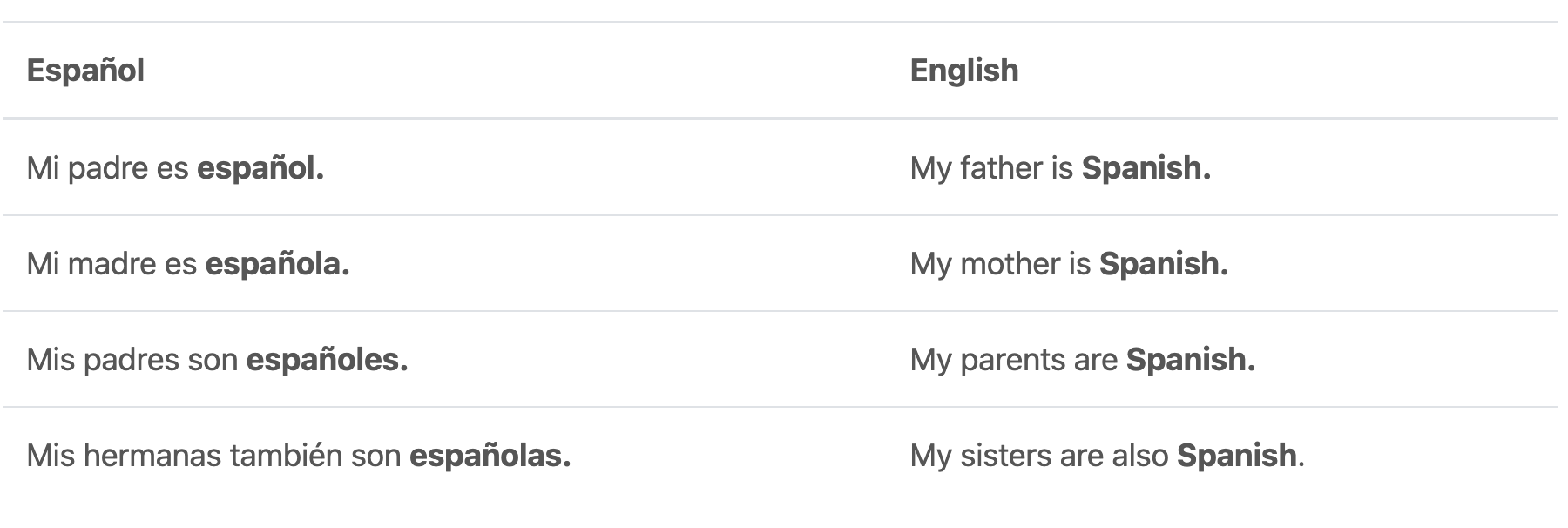
- Habrás observado que la nacionalidad cambia de terminación dependiendo de si se refiere a un hombre o a una mujer.
- También cambia según si se refiere a una persona o a un grupo de personas.
- Otra observación interesante es que las nacionalidades se escriben con inicial minúscula, ya que son adjetivos y no nombres propios.
- You may have noticed that the nationality changes its ending depending on whether it refers to a man or a woman.
- It also changes depending on whether it refers to one person or a group of people.
- Another interesting observation is that nationalities are written with a lowercase initial, as they are adjectives and not proper nouns.
Las nacionalidades: concordancia de género y número
Nationalities: Gender and number agreement
1. Nationalities and gender
Watch this video by Practiquemos and notice how the feminine is formed. Write down the names of countries and nationalities that you want to memorize.
2. Nationalities and number
Now watch this video by VideoEle and notice the nationalities in plural form. Keep expanding your vocabulary.
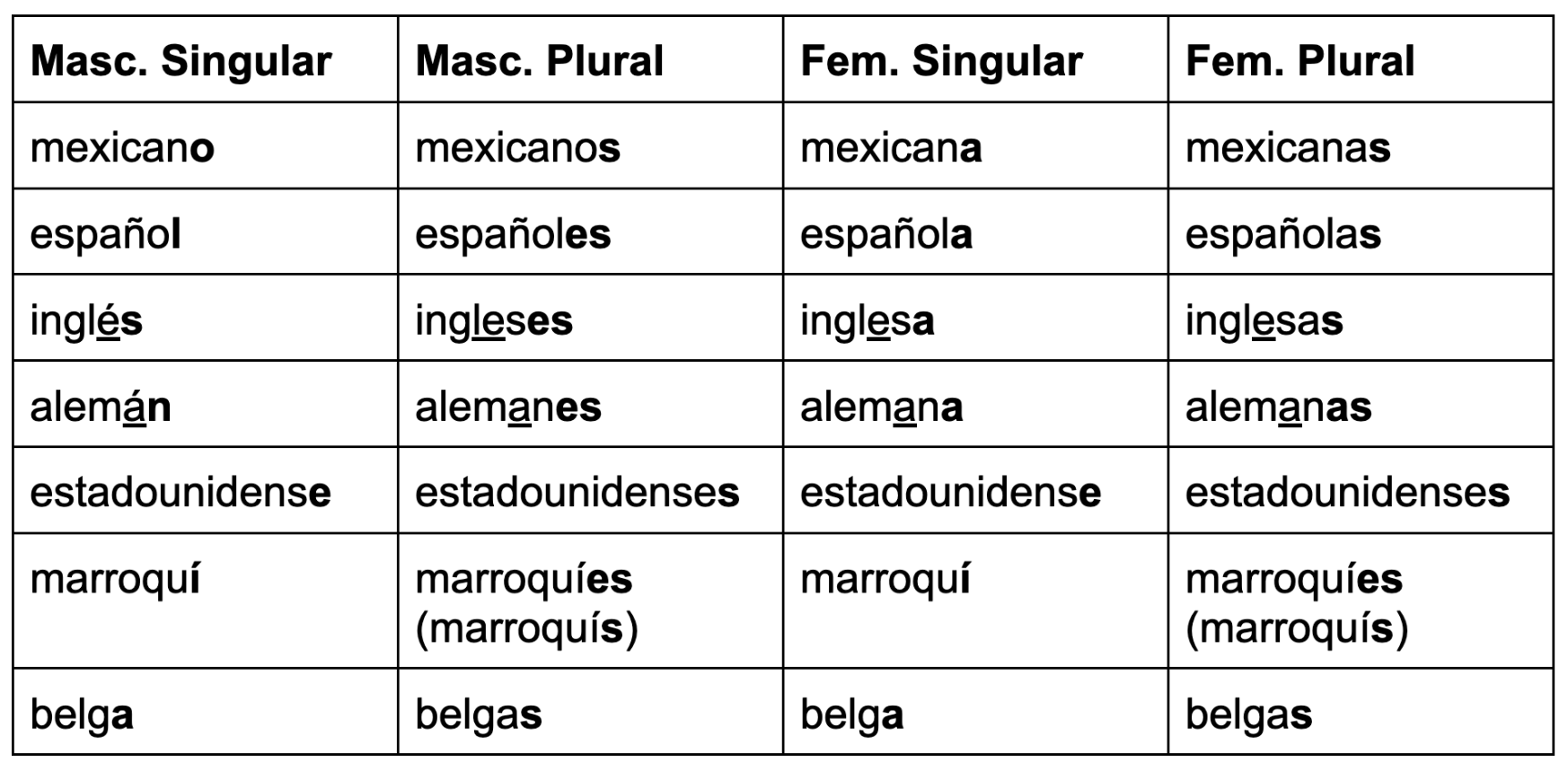
Ponte a prueba con esta hoja de trabajo para comprobar si has deducido correctamente las reglas. / Test yourself with this worksheet to check if you have deduced the rules correctly.
Hoja de trabajo: Las nacionalidades