1. Me presento
7. Mi lengua
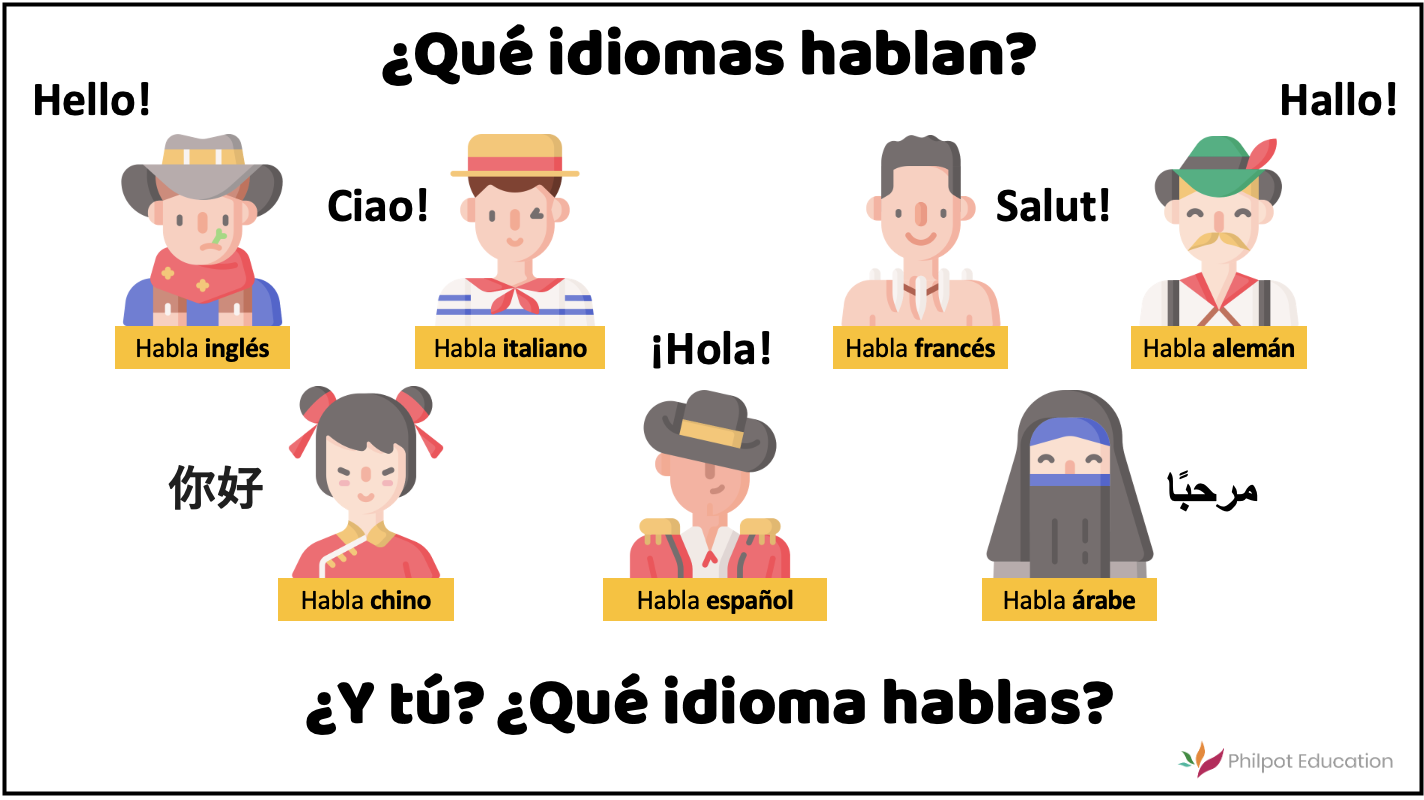
El idioma o la lengua oficial de un país suele coincidir con su nacionalidad en forma masculina. Al igual que la nacionalidad, el idioma no lleva mayúscula en español.
The official language of a country usually matches its nationality in the masculine form. Like the nationality, the language is not capitalized in Spanish.
El verbo HABLAR
The verb TO SPEAK
|
Español
|
Inglés
|
|---|---|
|
(Yo) hablo
|
I speak
|
|
(Tú) hablas
|
You speak (informal)
|
|
(Él / ella / usted) habla
|
He / she speaks / you speak (formal)
|
|
(Nosotros / nosotras) hablamos
|
We speak
|
|
(Vosotros / vosotras) habláis
|
You all speak (informal - Spanish from Spain)
|
|
(Ellos / ellas / ustedes) hablan
|
They speak / You all speak
|
The verb TO SPEAK is used as a model to conjugate the regular verbs of the first group (ending in AR). To understand what a verb is and what 'conjugating' means, click here.
Mira este vídeo de Spanish with Hispanic Horizons para escuchar una conversación básica entre dos personas que acaban de conocerse. Identifica las expresiones que has aprendido en esta unidad.
Watch this video from Spanish with Hispanic Horizons to listen to a basic conversation between two people who have just met. Identify the expressions you have learned in this unit.
Actividad en clase: HABLA
Class activity: SPEAK
En círculo, haz una cadena humana preguntando y contestando a las preguntas (nota: puedes intentar incorporar algunas expresiones del vídeo anterior):
- ¿De dónde eres?
- ¿Qué idiomas hablas?
In a circle, make a human chain asking and answering to the question (note: you may try to integrate some expressions from the previous video):
- Where are you from?
- What languages do you speak?
Enlace cultural: Las lenguas oficiales en España
Cultural link: The official languages in Spain
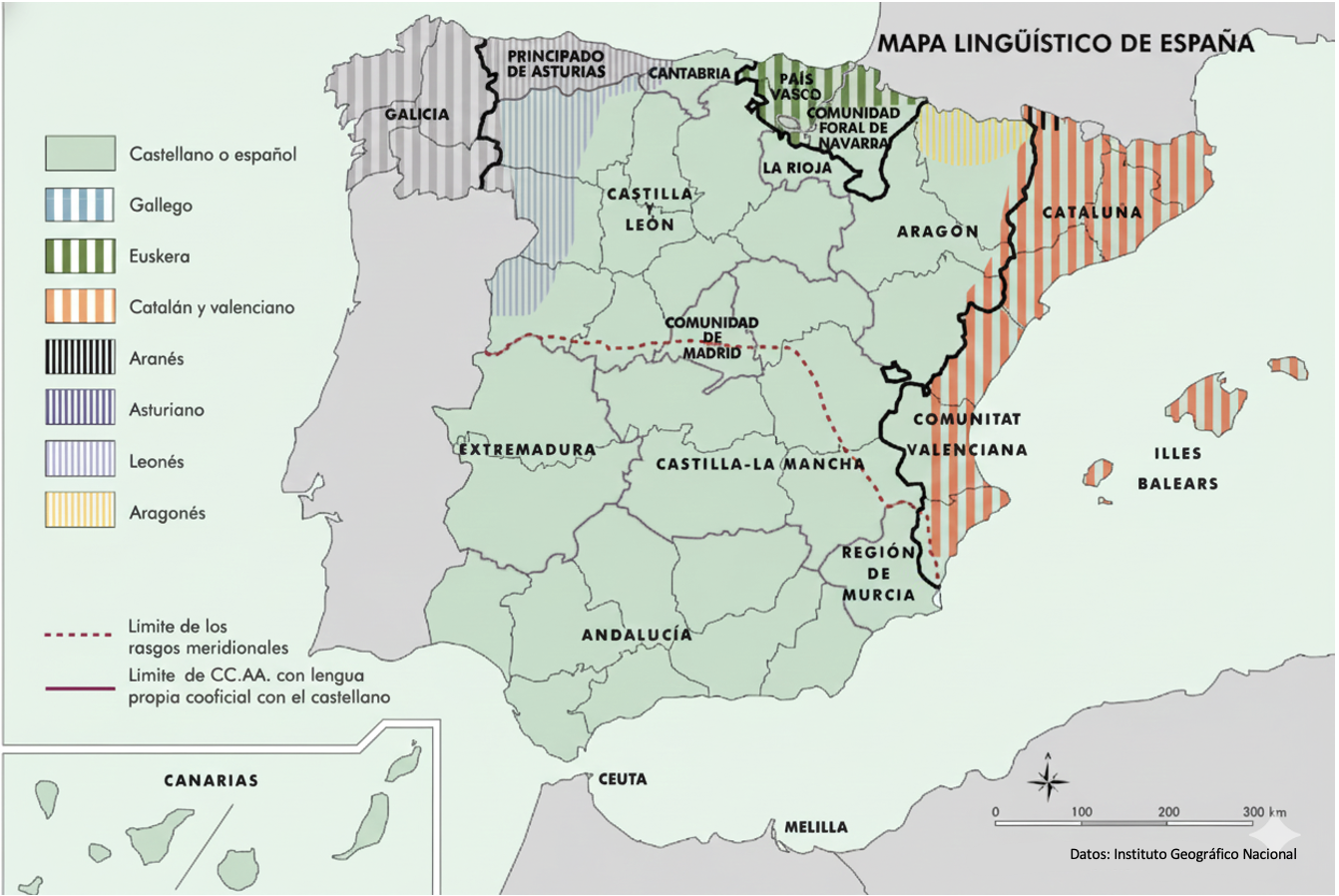
¿Sabías que España tiene cuatro idiomas oficiales? / Did you know that Spain has four official languages?
|
Los idiomas oficiales en España
|
Official languages in Spain
|
|---|---|
|
El español (también llamado “castellano” por ser originario del antiguo reino de Castilla) es la lengua oficial en todo el estado.
|
Spanish (also called 'Castilian' because it originated from the former Kingdom of Castile) is the official language throughout the entire country.
|
|
El catalán es co-oficial en Cataluña, la Comunidad Valenciana y las Islas Baleares. Los valencianos se refieren a su idioma como “valenciano”, pero esta lengua no está reconocida como independiente del catalán.
|
Catalan is co-official in Catalonia, the Valencian Community, and the Balearic Islands. The Valencians refer to their language as 'Valencian,' but this language is not recognized as independent from Catalan.
|
|
El gallego se habla en Galicia y es un idioma muy parecido al portugués. Al igual que el castellano y el catalán, es una lengua romance, es decir, proveniente del latín.
|
Galician is spoken in Galicia and is a language very similar to Portuguese. Like Castilian and Catalan, it is a Romance language, meaning it comes from Latin.
|
|
El vasco, vascuence o euskera es el idioma del País Vasco, que también se habla en Navarra. A diferencia de las otras lenguas co-oficiales españolas, no es una lengua romance. Su origen exacto sigue siendo discutido, pero se sabe que se trata de una lengua preindoeuropea.
|
Basque, also known as Euskera, is the language of the Basque Country and is also spoken in Navarre. Unlike the other co-official Spanish languages, it is not a Romance language. Its exact origin is still debated, but it is known to be a pre-Indo-European language.
|
Enlace cultural: El español en el mundo
Cultural link: Spanish in the world
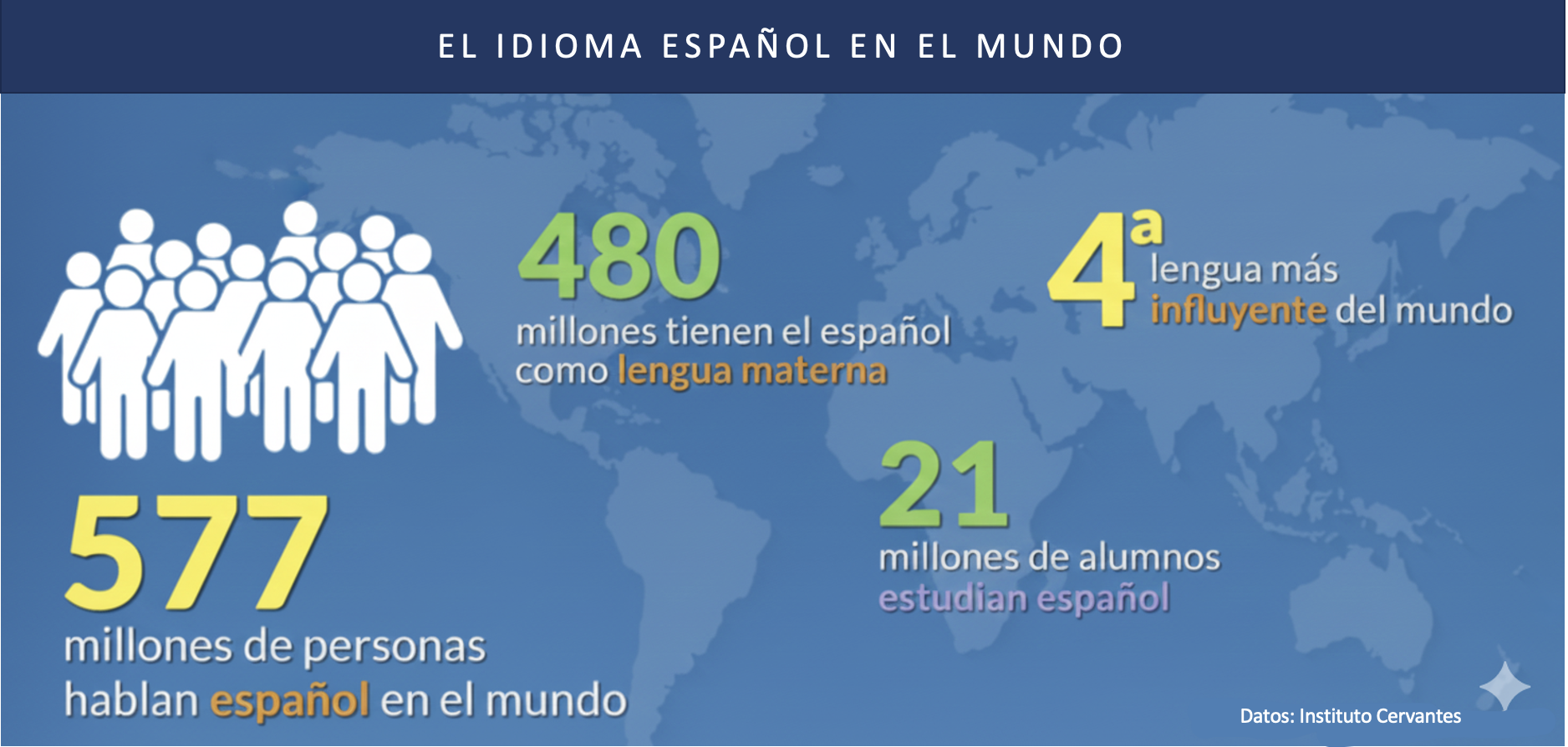
¿Sabías que el español es lengua oficial o co-oficial en 21 territorios y cuatro continentes? / Did you know that Spanish is an official or co-official language in 21 territories and four continents?
|
El español se habla:
|
Spanish is spoken:
|
|---|---|
|
En Europa: en España
|
In Europe: in Spain.
|
|
En África: en Guinea Ecuatorial.
|
In Africa: in Equatorial Guinea.
|
|
En América del Norte (Norteamérica): en México.
Además, según las estimaciones realizadas por la Oficina del Censo de los Estados Unidos, la población estadounidense de origen hispano superaba en julio de 2022 los 62,5 millones de personas (casi un 19% de su población total).
|
In North America: in Mexico.
Additionally, according to estimates by the United States Census Bureau, the Hispanic population in the U.S. exceeded 62.5 million people in July 2022 (almost 19% of its total population).
|
|
En América Central (Centroamérica): en Costa Rica, El Salvador, Guatemala, Honduras y Nicaragua, junto con el estado sureño mexicano de Chiapas.
|
In Central America: in Costa Rica, El Salvador, Guatemala, Honduras, and Nicaragua, along with the Mexican southern state of Chiapas.
|
|
En América del Sur (Sudamérica): en Argentina, Bolivia, Chile, Colombia, Ecuador, Paraguay, Perú, Uruguay y Venezuela.
|
In South America: in Argentina, Bolivia, Chile, Colombia, Ecuador, Paraguay, Peru, Uruguay, and Venezuela.
|
|
En el mar Caribe: en las islas de Cuba, Puerto Rico y la República Dominicana.
|
In the Caribbean sea: in the islands of Cuba, Puerto Rico, and the Dominican Republic.
|
The area of the Americas where Spanish is spoken is called 'Spanish America.' It is a smaller area than 'Latin America,' which, in addition to Spanish-speaking countries, includes Portuguese-speaking countries (e.g., Brazil) and French-speaking countries (e.g., French Guiana).
Para terminar, mira este videoclip de Gente de La Zona y Marc Anthony (La Gozadera) para acercarte a la cultura caribeña. ¿Cuántos países hispanohablantes oyes en la canción? ¡Toma nota!
To finish, watch this videoclip by Gente de Zona and Marc Anthony (La Gozadera) to get closer to Caribbean culture. How many Spanish-speaking countries do you hear in the song? Take note!