1. Mi vida cotidiana
7. Extra: Verbos reflexivos (primera parte)
Reflexiona sobre los reflexivos
Reflect on the reflexives
Basándote en el ejemplo de la ilustración, ¿sabrías explicar la diferencia entre un verbo no reflexivo y un verbo reflexivo?
Based on the example in the illustration, would you be able to explain the difference between a non-reflexive verb and a reflexive verb?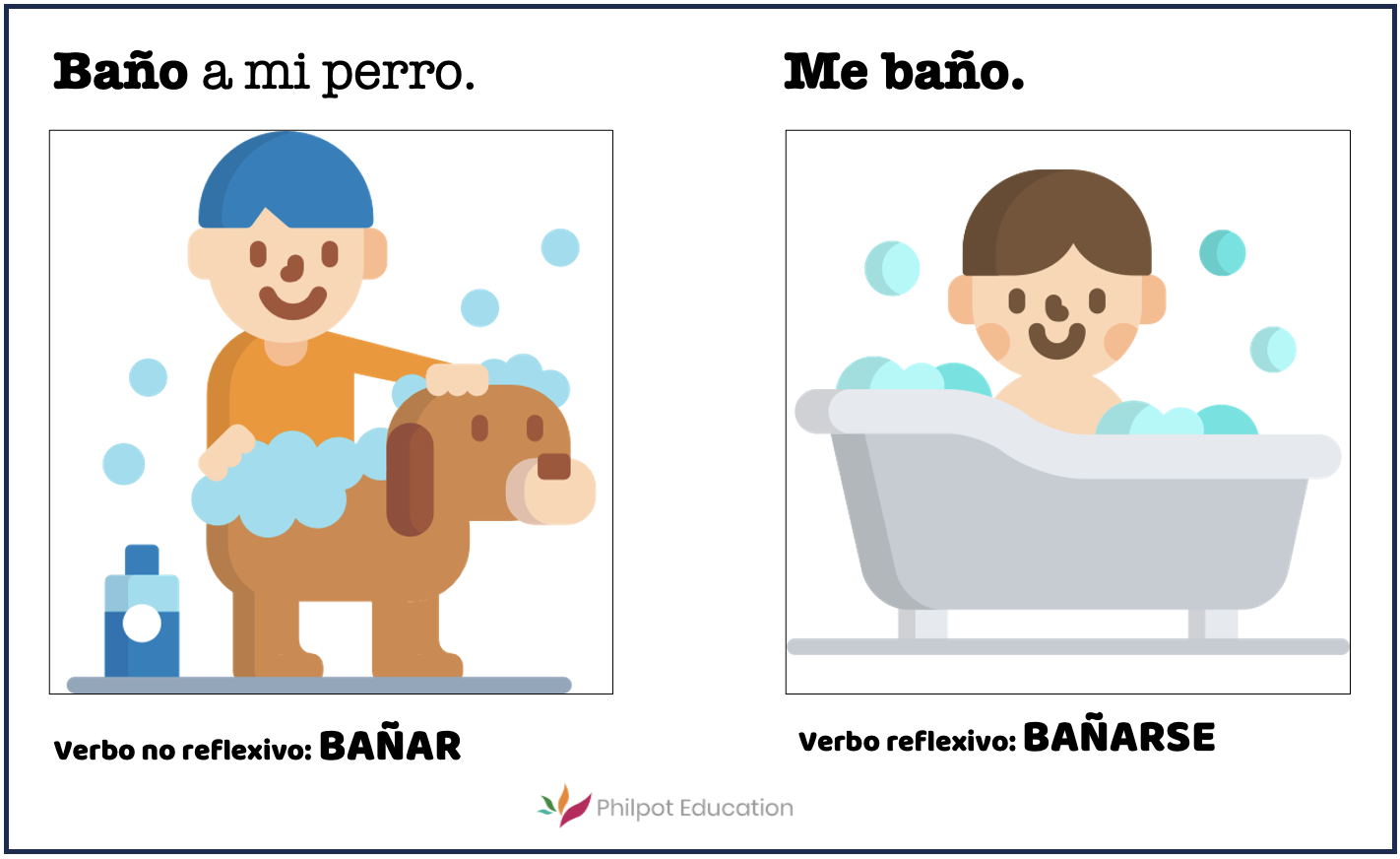
Watch this VideoELE video to see more examples of non-reflexive vs reflexive verbs.
A reflexive verb is one in which the action performed by the subject falls back on the subject itself; that is, the same person is both the subject and the object (direct or indirect) of the action. Let’s look at some examples to understand the logic.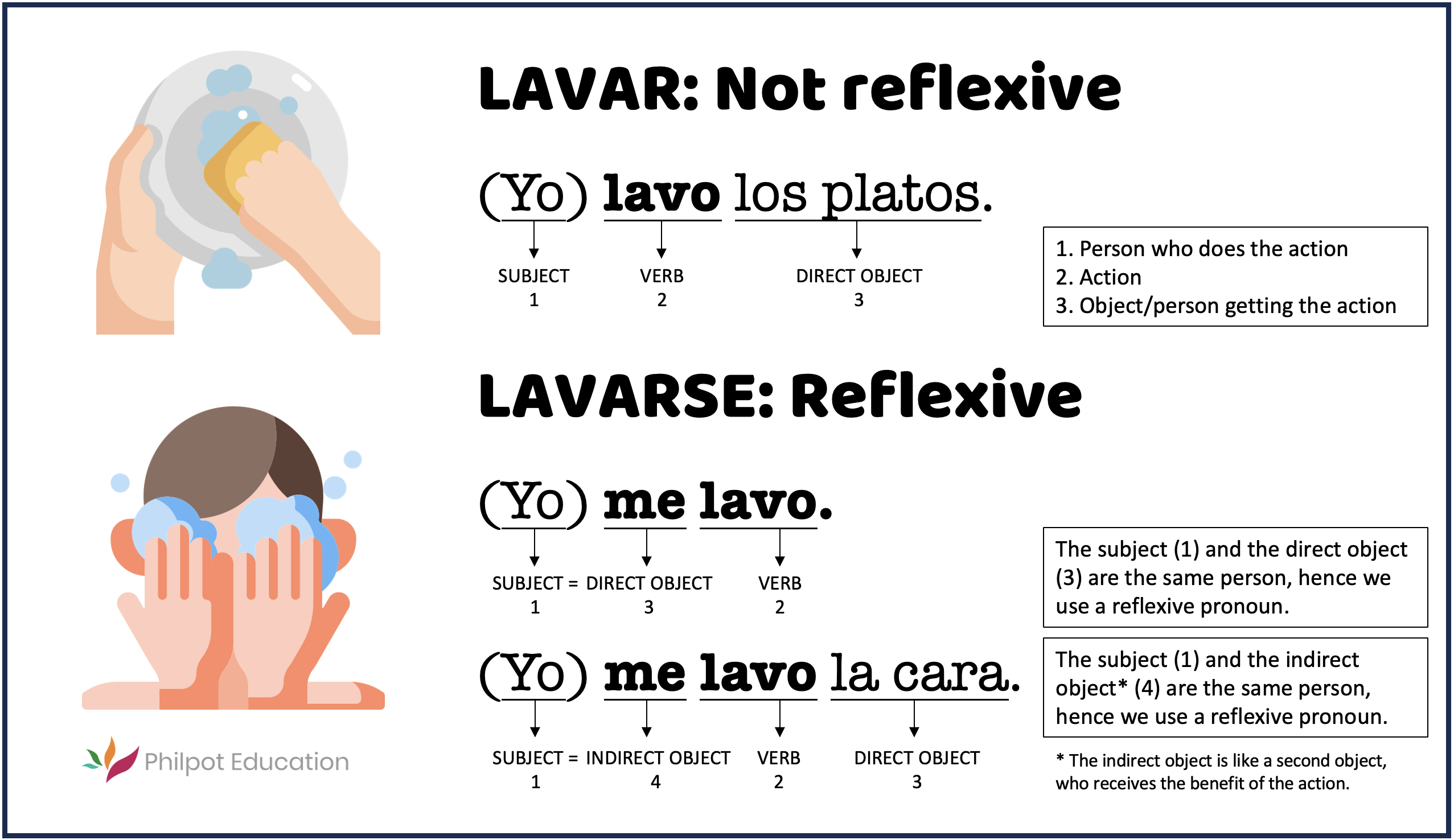
Posición del pronombre reflexivo
Position of the reflexive pronoun
As with all object pronouns in Spanish, the reflexive pronoun typically appears before the conjugated verb.
| Yo me preparo. | I get ready (I make myself ready). |
| Tú te lavas las manos. | You wash your hands (you wash the hands to yourself). |
| Usted no se duerme. | You don't fall asleep (you don't make yourself asleep). |
1. When the reflexive verb is used in the infinitive, we usually have two options: placing it before the conjugated verb or attaching it to the infinitive.
| Nos debemos levantar temprano. Debemos levantarnos temprano. |
We must get up early (we must get ourselves up early). |
| ¿Os vais a duchar? ¿Vais a ducharos? |
Are you going to shower (are you going to shower yourselves)? |
| Les gusta echarse la siesta.
|
They like taking a nap. Here, there is only one option: to avoid the clash between the indirect pronoun that goes with the verb gustar (les) and the reflexive pronoun that goes with the verb echarse (se). |
2. When the reflexive verb is used in the gerund, we also have two options.
| Me estoy duchando. Estoy duchándome. |
I am having a shower (I am showering myself). |
| Ella todavía se sigue maquillando. Ella todavía sigue maquillándose. |
She is still putting on makeup (she is still putting makeup on herself). |
3. When we use the imperative mood to give an order, the pronoun must be placed obligatorily after the verb as a suffix. However, when the order is a prohibition (a negative order), the pronoun is obligatorily placed before the verb.
| Lávate las manos. |
Wash your hands. Positive command: the reflexive pronoun is placed after the verb and attached to it. |
| No te preocupes.
|
Don't worry. Negative command: the reflexive pronoun is placed before the verb. |