2. Mi casa
3. ¿Dónde están las cosas?
Actividad de calentamiento: El mobiliario de la casa
Warm-up activity: The house furniture
En la lección anterior hemos visto una extensa lista de vocabulario para hablar del mobiliario, electrodomésticos y otros objetos de la casa. ¿Puedes recordar algunas palabras? ¿Qué hay en cada habitación?
In the previous lesson, we looked at an extensive list of vocabulary to talk about furniture, appliances, and other household items. Can you remember some words? What is in each room?
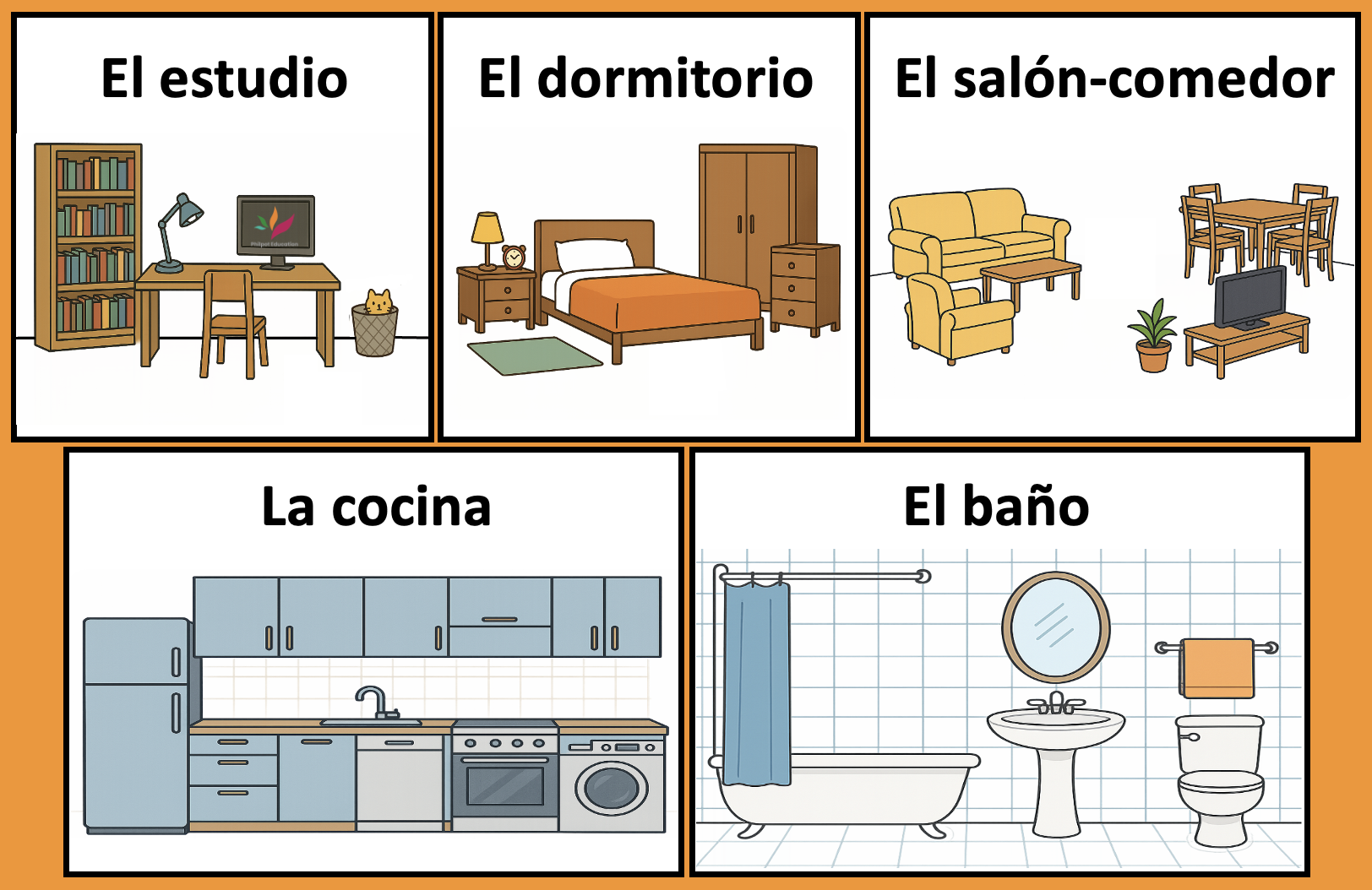
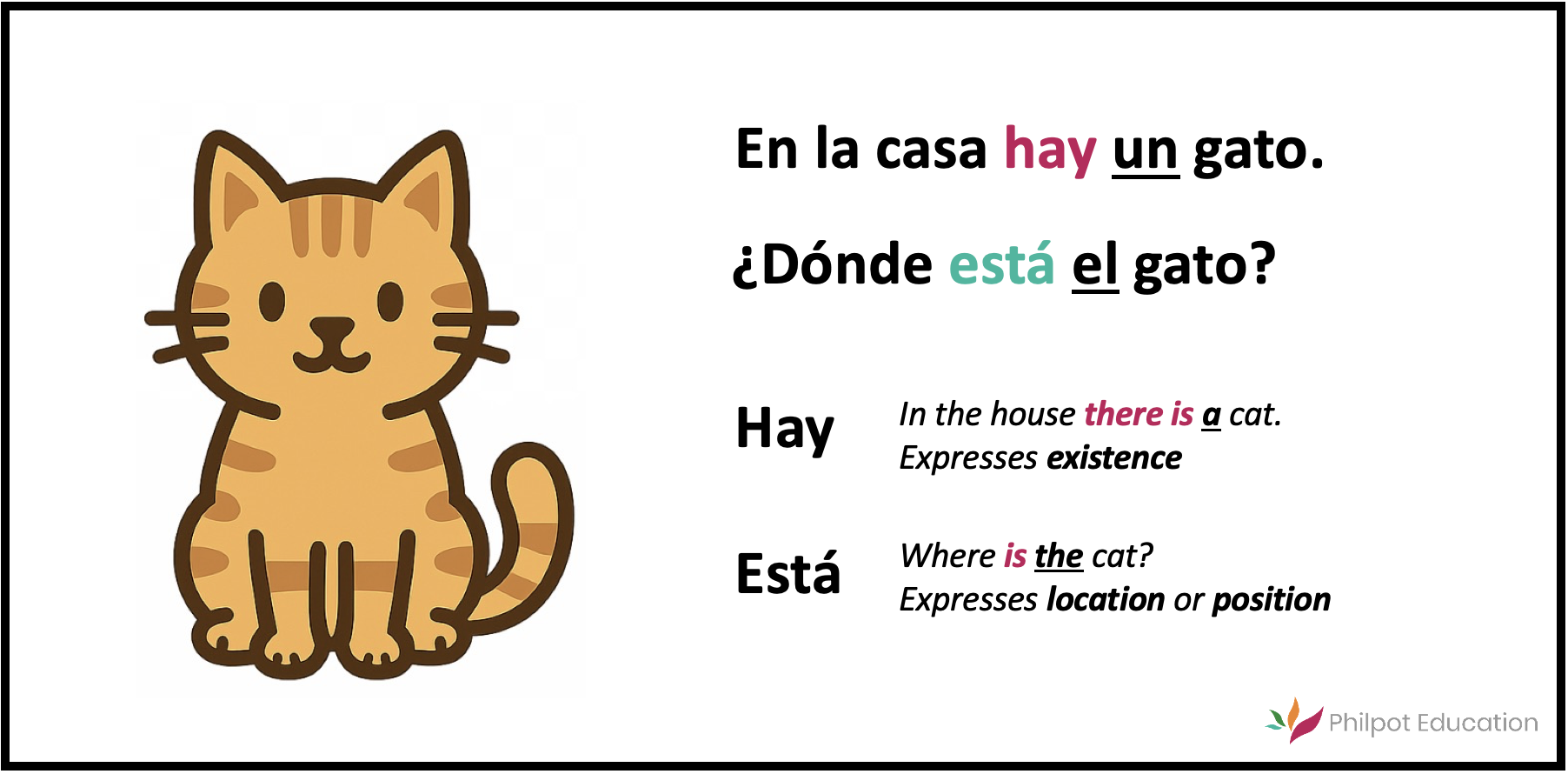
Fíjate en las imágenes de la actividad de calentamiento. Hay un gato escondido. ¿En qué habitación está? ¿Dónde se esconde? Para responder a mis preguntas, necesitarás preposiciones de lugar. Observa la presentación y toma nota del significado de las preposiciones en la hoja de trabajo.
Take a look at the images in the warm-up activity. There is a hidden cat. Which room is it in? Where is it hiding? To answer my questions, you will need prepositions of place. Look at the presentation and take note of the meanings of the prepositions on the worksheet.
Hoja de trabajo: ¿Dónde está el gato?
LA UBICACIÓN: ESTAR and other verbs
THE LOCATION: TO BE and other verbs
Remember that to say where things are, you must use the verb ESTAR. Use it to speak about location:- El gato está en la sala de estudio (The cat is in the study room)
- El piso está en Madrid. (The apartment is in Madrid)
- El baño está al fondo del pasillo. (The bathroom is at the end of the hallway)
- Estoy en casa. (I am at home).
Use it to describe the position:
- El gato está dentro de la papelera. (The cat is inside the wastebasket)
- Estoy de pie. (I am standing)
| ENCONTRARSE | HALLARSE |
|---|---|
| (Yo) me encuentro | (Yo) me hallo |
| (Tú) te encuentras | (Tú) te hallas |
| (Él, ella, usted) se encuentra | (Él, ella, usted) se halla |
| (Nosotros/as) nos encontramos | (Nosotros/as) nos hallamos |
| (Vosotros/as) os encontráis | (Vosotros/as) os halláis |
| (Ellos/as, ustedes) se encuentran | (Ellos/as, ustedes) se hallan |
Remember that the only time you use the verb SER to talk about a location is when you are referring to a venue: La fiesta es en mi casa (the party is at my house).
- Antes de escuchar el audio: completa la actividad interactiva para familiarizarte con el vocabulario clave. ¡Fíjate bien en las palabras, que te serán muy útiles después!
- Mientras escuchas el audio: dibuja la salita y su mobiliario según la descripción. No te preocupes si no lo recuerdas todo a la primera: puedes escuchar el audio varias veces y mejorar tu dibujo cada vez.
- Después de escuchar el audio: comprueba tu dibujo haciendo clic aquí y descubre qué detalles acertaste.
- Before listening to the audio: complete the interactive activity to get familiar with the key vocabulary. Pay close attention to the words—they’ll be very useful later!
- While listening to the audio: draw the small living room and its furniture according to the description. Don’t worry if you don’t remember everything the first time—you can listen to the audio several times and improve your drawing each time!
- After listening to the audio: check your drawing by clicking here and see which details you got right. Feel free to correct it and make your final version even better!
Actividad en parejas: Dibuja y describe
Pair activity: Draw and describe
- Piensa en una habitación de la casa (el dormitorio, el salón-comedor, la cocina o el cuarto de baño). Dibuja la habitación en una hoja, incluyendo su mobiliario y objetos decorativos. ¡Cuidado! Debes ser capaz de nombrar cada elemento de tu dibujo. Si no recuerdas alguna palabra, búscala en la lección. No enseñes tu dibujo a tus compañeros.
- Ahora, en parejas, describe tu habitación a tu compañero/a, quien deberá dibujarla siguiendo tus instrucciones. Solo puedes hablar en español. ¡Intenta ser lo más claro y creativo posible!
- Comparad vuestros dibujos: si hay diferencias, buscad la causa del malentendido y comentad cómo podríais haberlo explicado mejor.
- Por último, repetid el ejercicio, invirtiendo los roles.
- Think of a room in the house (the bedroom, the living-dining room, the kitchen, or the bathroom). Draw the room on a sheet of paper, including its furniture and decorative objects. Be careful! You should be able to name each element in your drawing. If you don’t remember a word, look it up in the lesson. Do not show your drawing to your classmates.
- Now, in pairs, describe your room to your partner, who must draw it following your instructions. You can only speak in Spanish. Try to be as clear and creative as possible!
- Compare your drawings: if there are differences, look for the reason behind the misunderstanding and discuss how you could have explained it better.
- Finally, repeat the exercise, switching roles.
Tarea individual: ESCRIBE
Individual task: WRITE
Escribe un correo a tu corresponsal hispanohablante para describirle tu casa. Debes mencionar su tamaño, cuántas habitaciones tiene, cuál es tu habitación favorita y por qué. También debes describir en detalle tu dormitorio (decoración y distribución de los muebles).
Haz clic en el enlace para repasar el formato del correo electrónico.
Write an email to your Spanish-speaking pen pal to describe your house. You should mention its size, how many rooms it has, which is your favorite room, and why. You should also describe your bedroom in detail (decoration and furniture layout).
Click on the link to review the email format.
De Profe a Profe:
Para terminar, quiero compartir una presentación que he utilizado muchas veces con éxito en clase. Es un poco larga, pero con ella repasaremos de manera completa el vocabulario de la casa. Alienta la participación de los alumnos haciéndoles preguntas que les empujen a usar diferentes estructuras y vocabulario. Pon especial énfasis en los verbos hay, estar (o encontrarse) y ser. Por ejemplo:
- ¿Qué es esto?
- ¿En qué habitación se encuentra la pila o el fregadero?
- ¿Qué otros electrodomésticos hay en una cocina?
- ¿Cómo es esta cocina? ¿De qué color son los armarios?
- ¿Dónde está la nevera?