1. Dónde vivo
2. ¿Dónde está tu casa?
Lluvia de ideas: Repaso
Brainstorm: Revision
¿Vives en un piso o en una casa? ¿Qué hay en tu casa? ¿Recuerdas el vocabulario de la casa y de su contenido? Haz click en los iconos interactivos para repasar el vocabulario que aprendimos al estudiar nuestra rutina diaria.
Do you live in an apartment or a house? What is in your house? Do you remember the vocabulary for the house and its contents? Click on the interactive icons to review the vocabulary we learned when studying our daily routine.
En esta lección no vamos a describir cómo es nuestra casa (grande, espaciosa, pequeña, acogedora, luminosa, céntrica, etc.), sino a decir dónde se encuentra. Vamos a hablar de su ubicación y a aprender a dar nuestra dirección postal en español.
In this lesson, we are not going to describe what our house is like (big, spacious, small, cozy, bright, centrally located, etc.), but rather where it is. We will talk about its location and learn how to give our postal address in Spanish.
La ubicación (the location)
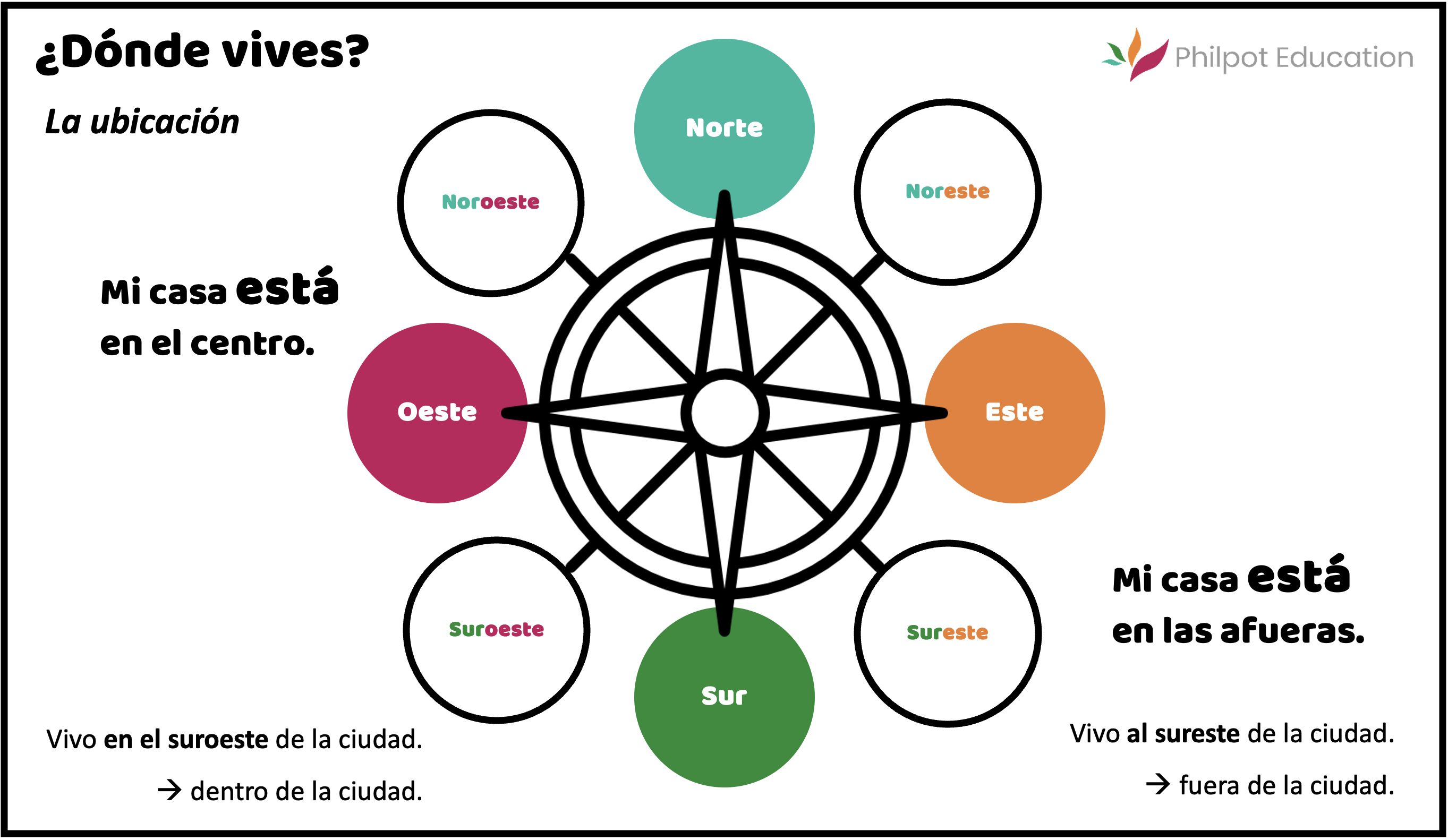
Para hablar de la ubicación, vamos a utilizar principalmente el verbo estar. También podemos usar el verbo encontrarse. En registros muy formales, también se pueden usar los verbos ubicarse y hallarse. Completa la actividad interactiva para repasar vocabulario útil y practicar los usos de los verbos ser y estar. Si prefieres, también puedes descargar la versión en papel, que incluye las soluciones explicadas para comprobar tus respuestas.
To talk about location, we are going to mainly use the verb estar (to be). We can also use the verb encontrarse (to be found). In very formal contexts, the verbs ubicarse and hallarse (to be located) can also be used. Complete the interactive activity to review useful vocabulary and practice the uses of the verbs ser and estar. If you prefer, you can also download the paper version, which includes the explained answers to check your work.
Hoja de trabajo: ¿SER o ESTAR?
La dirección (the address)
Es importante que aprendas a escribir direcciones en español, ya que es uno de los elementos formales de dos tipos de texto: la postal y la carta formal. Esta imagen interactiva muestra un sobre con la dirección del destinatario. Haz clic en los iconos interactivos para leer las explicaciones.
It is important that you learn to write addresses in Spanish, as it is one of the formal elements of two types of texts: postcards and formal letters. This interactive image shows an envelope with the recipient’s address. Click on the interactive icons to read the explanations.
Tarea escrita: La postal
Written task: The postcard
Imagina que acabas de mudarte a una nueva ciudad. Manda una postal de tu nueva ciudad a tu mejor amigo/a en España. Menciona cómo te sientes, cómo es tu nueva casa y dónde está.
Imagine that you have just moved to a new city. Send a postcard from your new city to your best friend in Spain. Mention how you feel, what your new home is like, and where it is located.