1. Dónde vivo
3. ¿Cómo es tu barrio?
Podemos responder a esta pregunta de dos formas:
- Describiendo sus características: es un barrio tranquilo, animado, multicultural, etc.
- Enfocándonos en sus atracciones: mi barrio tiene muchas tiendas, cafeterías, restaurantes, parques, etc. / En mi barrio hay muchas tiendas, cafeterías, restaurantes, parques, etc.
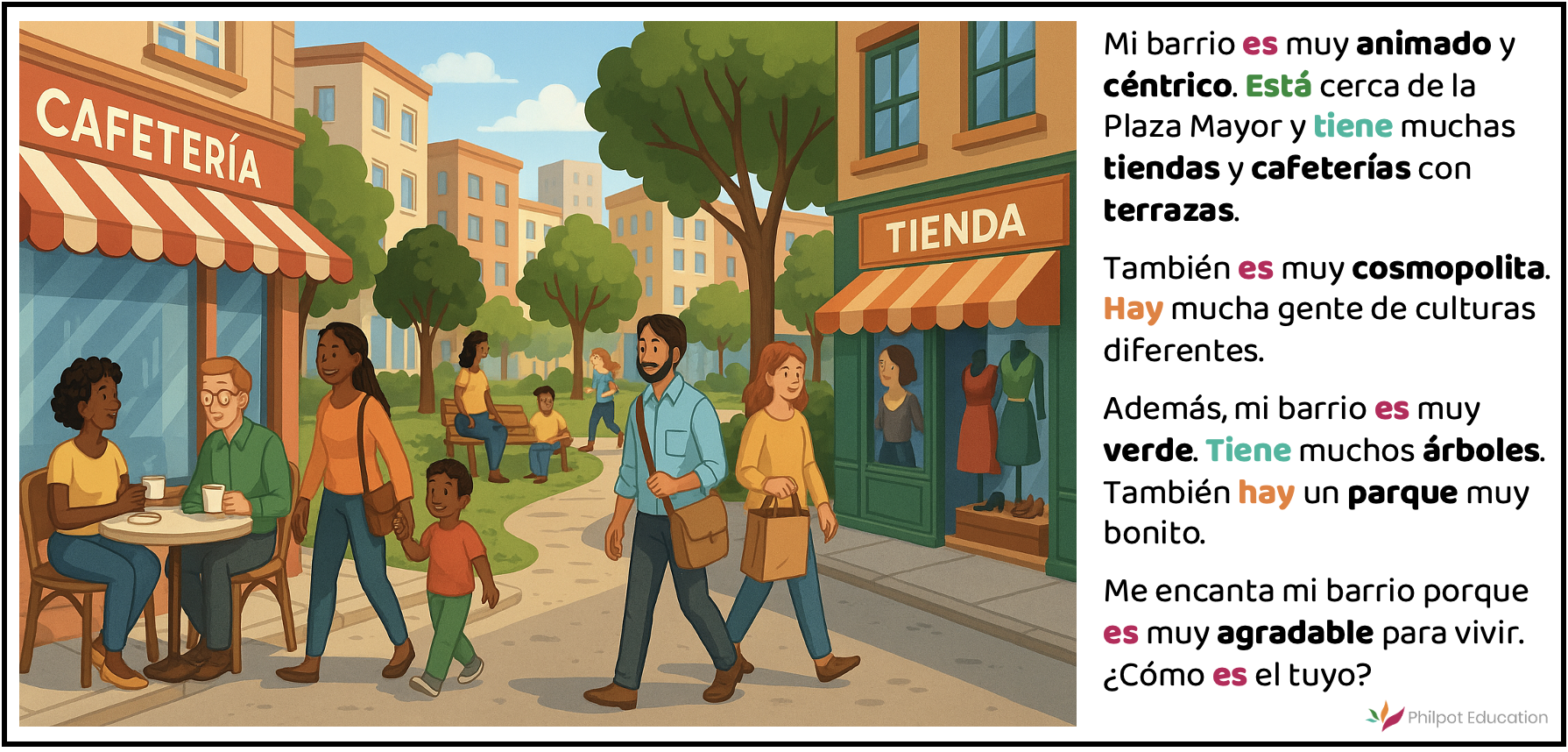
We can answer this question in two ways:
- Describing its characteristics: it is a quiet, lively, multicultural neighborhood, etc.
- Focusing on its attractions: my neighborhood has many shops, cafés, restaurants, parks, etc. / In my neighborhood, there are many shops, cafés, restaurants, parks, etc.
CAS: Ideas para Creatividad
Ideas for CAS (Creativity)
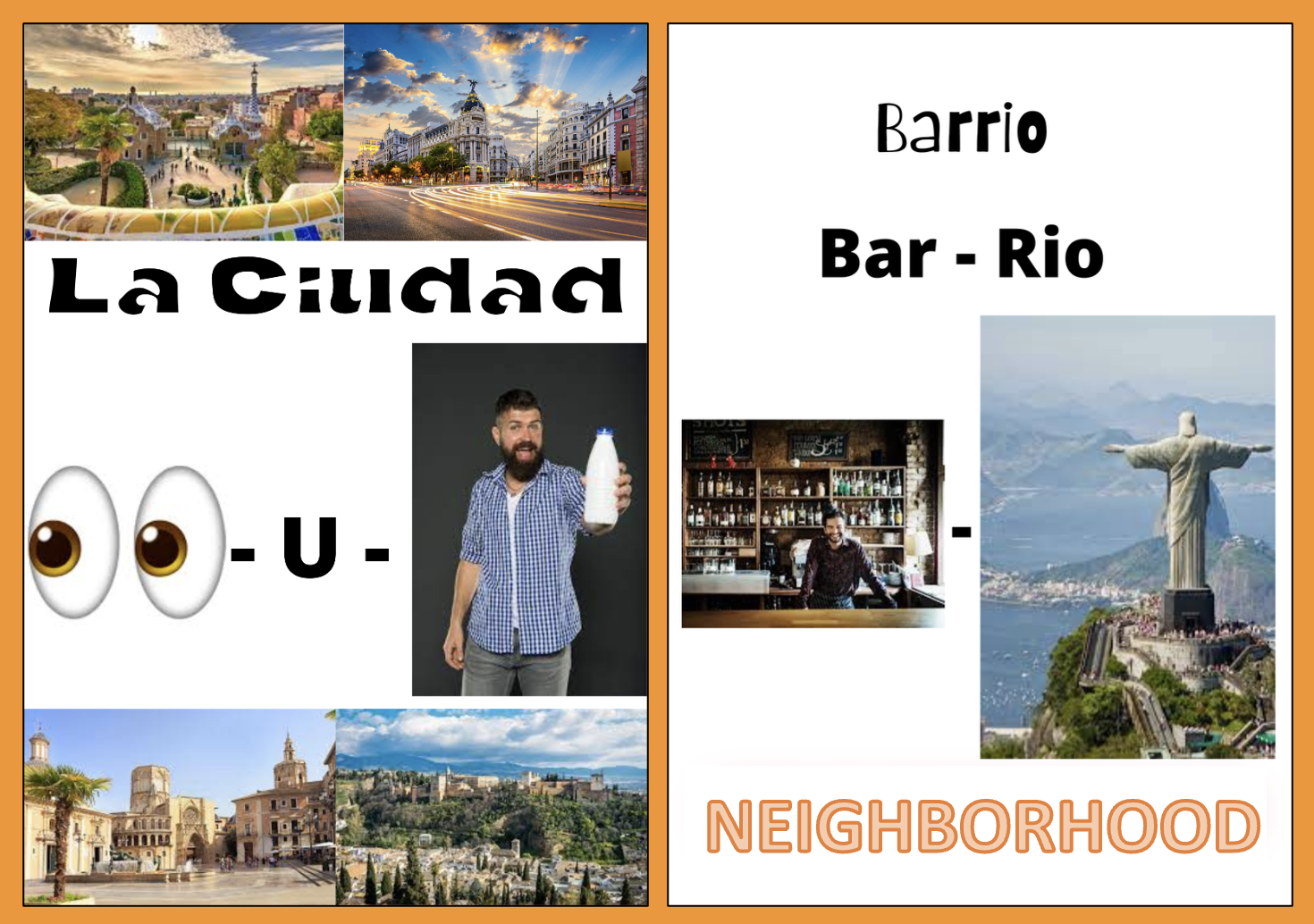
Estos dos pósteres fueron creados por Lucas, uno de mis antiguos alumnos, para su exposición de CAS. ¿Qué te parece su estrategia para recordar las palabras y su ortografía?
Mira este vídeo de VideoEle para ampliar tu vocabulario sobre la ciudad. Después de ver el vídeo, haz la actividad interactiva para comprobar cuánta información recuerdas. También puedes descargar aquí su cuaderno de actividades.
Watch this video from VideoEle to expand your vocabulary about the city. After watching the video, do the interactive activity to see how much information you remember. You may also download its activity booklet here.
Las enumeraciones: estructuras positivas y negativas
Lists: positive and negative structures
Observa los ejemplos y fíjate en los conectores en listas positivas y negativas.
| Listas positivas | Listas negativas |
|---|---|
|
En mi barrio hay un centro comercial, muchas tiendas y un mercado. In my neighborhood there is a mall, many shops, and a market. |
En mi barrio no hay museos, ni monumentos ni oficina de información turística. In my neighborhood, there are no museums, monuments, or tourist information offices. In my neighborhood, there are neither museums, monuments, nor tourist information offices. |
|
También hay cines y restaurantes. There are also cinemas and restaurants. |
Tampoco hay hoteles ni una estación de tren. There are also no hotels or a train station. There are neither hotels nor a train station. |
Compara las frases en español con sus traducciones al inglés. ¿Qué diferencias encuentras en cuanto a la puntuación y al orden de las palabras? ¡Cuidado! ¡No traduzcas del inglés al español palabra por palabra.
Compare the Spanish sentences with their English translations. What differences do you notice regarding punctuation and word order? Be careful! Don’t translate word for word from English into Spanish.
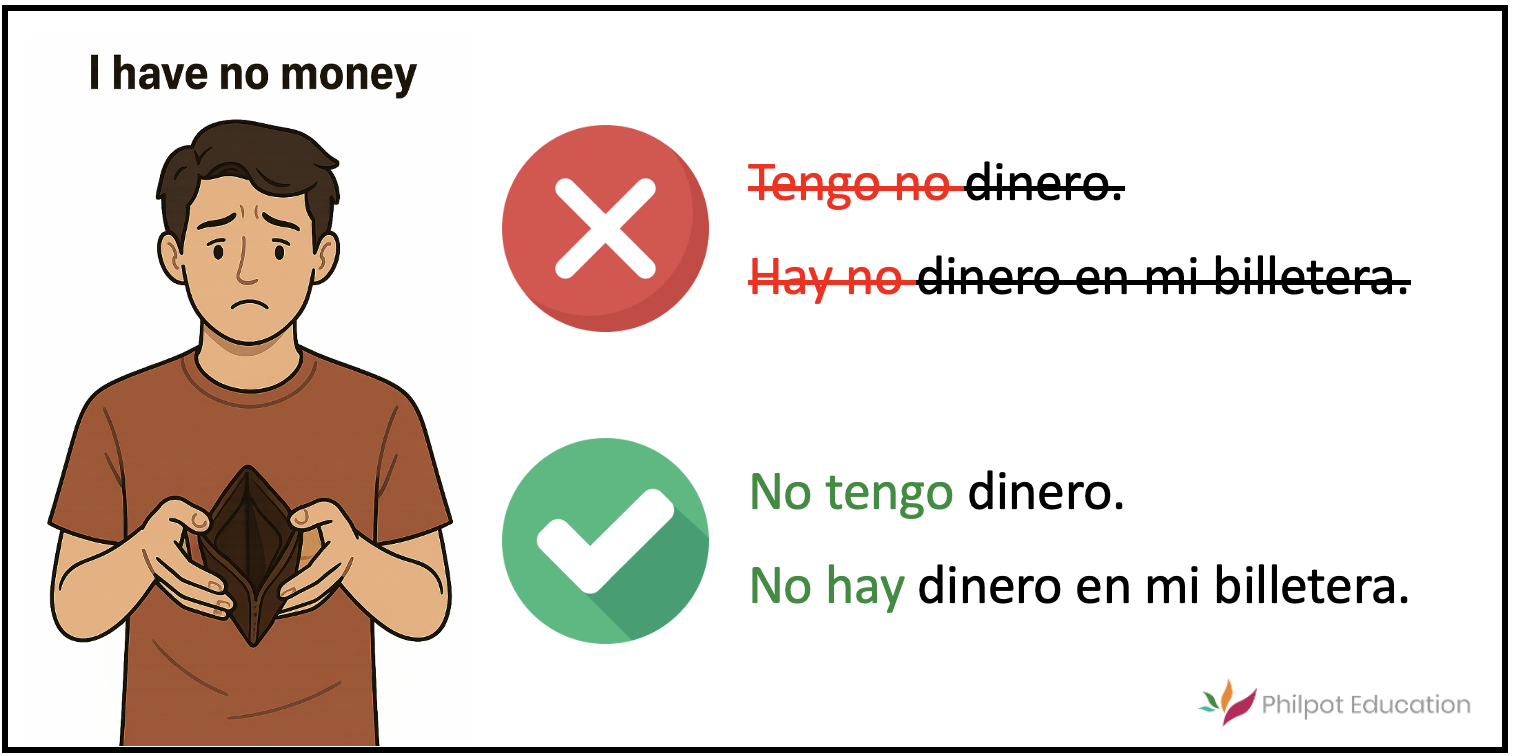
Ponte a prueba / Test your skills
Pon a prueba tus conocimientos con la siguiente actividad interactiva. Debes completar el texto con las palabras apropiadas: es - está - tiene - hay - y - ni - también - tampoco.
Test your knowledge with the following interactive activity. You must complete the text with the appropriate words: es - está - tiene - hay - y - ni - también - tampoco.
Actividad en parejas: ¿Cómo es tu barrio?
Pair activity: How is your neighboorhood?
En parejas, contestad a turnos la pregunta. Explicad qué tipo de barrio es, por qué os gusta (o no), qué lugares interesantes tiene y qué le falta para ser perfecto. Por último, comparad vuestros barrios (por ejemplo: mi barrio también tiene un supermercado / mi barrio tampoco tiene un cine).
In pairs, take turns answering the question. Explain what kind of neighborhood it is, why you like it (or not), what interesting places it has, and what it lacks to be perfect. Finally, compare your neighborhoods (for example: my neighborhood also has a supermarket / My neighborhood doesn’t have a cinema either.).