1. Dónde vivo
5. Extensión: Vivir en comunidad (año 2)
Un sinónimo de barrio es vecindario, que hace referencia al conjunto de vecinos de un municipio o de una parte del mismo. En esta lección trataremos las relaciones entre vecinos dentro de un ámbito más reducido: el de la comunidad de vecinos, es decir, el conjunto de personas que habitan un mismo edificio.
A synonym for barrio is vecindario (neighborhood), which refers to the group of neighbors in a municipality or part of it. In this lesson, we will focus on the relationships between neighbors within a smaller scope: the community of neighbors, that is, the group of people who live in the same building.
Actividad de calentamiento: Reglas de convivencia
Warm-up activity: Rules of coexistence
Vivir en comunidad no siempre es sencillo, pues cada vecino tiene gustos, rutinas y estilos de vida diferentes. Por ello, en todas las comunidades hay ciertas normas de convivencia que se deben respetar para asegurar que todos los residentes puedan vivir cómodamente en su hogar. En tu opinión, ¿qué reglas son necesarias? Observa la imagen: ¿qué problemas se muestran? Haz clic en los iconos interactivos para leer las normas de convivencia del edificio.
Living in a community is not always easy, as each neighbor has different tastes, routines, and lifestyles. For this reason, every community has certain rules of coexistence that must be respected to ensure that all residents can live comfortably in their homes. In your opinion, what rules are necessary? Look at the image: what problems are shown? Click on the interactive icons to read the building’s rules of coexistence.
Podemos clasificar las normas de convivencia en tres grupos: obligaciones, prohibiciones y recomendaciones. Completa la siguiente actividad interactiva y presta atención a las estructuras.
We can classify the rules of coexistence into three groups: obligations, prohibitions, and recommendations. Complete the following interactive activity and pay attention to the structures.
Obligaciones, prohibiciones y recomendaciones
Duties, prohibitions and recommendations
To express duties, prohibitions, and recommendations, we can use a variety of structures, many using an infinitive verb, as shown in the examples below. Note that the English translation often doesn't follow the same pattern.| Obligaciones | Duties |
|---|---|
| Hay que respetar el reglamento. |
One must respect the rules.
|
| Se deben pagar las cuotas. | The fees must be paid. |
| Tenemos que mantener limpias las escaleras. | We have to keep the stairs clean. |
| Prohibiciones | Prohibitions |
| Está prohibido fumar en zonas comunes cerradas. | Smoking is prohibited in enclosed common areas. |
| No se permite hacer fiestas por la noche. | Parties are not allowed at night. |
| No se admiten perros en el jardín. | Dogs are not allowed in the garden. |
| Recomendaciones | Recommendations |
| Se recomienda asistir a las juntas de vecinos. | It is recommended to attend the homeowners' meetings. |
| Ruegos | Pleas |
|---|---|
| Se ruega cerrar la puerta al salir. |
One must respect the rules.
|
| Por favor, cerrar la puerta. | The fees must be paid. |
| Agradecimientos | Thanks |
| Gracias por cerrar la puerta. | Thanks for closing the door. |
| Órdenes | Orders |
|---|---|
| Por favor, cierra la puerta (tú) |
Please, close the door.
|
| Por favor, baje el volumen (usted). | Please, lower the volume. |
| Por favor, asistan a la reunión (ustedes). | Please, attend the meeting. |
| Prohibiciones | Prohibitions |
| Por favor, no tires papeles al suelo (tú). | Please, don't throw papers on the floor. |
| Por favor, no haga ruido (usted). | Please, don't make noise. |
| Por favor, no fumen en el ascensor (ustedes). | Please, don't smoke in the lift. |
Aquí tienes una serie de actividades para practicar estas estructuras en contexto. / Here is a series of activities to practice these structures in context.
En grupo, imaginad que sois vecinos de escalera. Juntos tenéis que escribir el reglamento de vuestra comunidad de vecinos.
- Vais a compartir la tarea trabajando en grupos de enfoque:
-
- Las zonas comunes
- El ruido y otras molestias
- Las mascotas
- Escribid al menos cinco puntos para cada sección, usando una variedad de estructuras.
- Presentad vuestro trabajo al resto del grupo y haced sugerencias para mejorar vuestro reglamento.
In groups, imagine that you are neighbors in the same building. Together, you have to write the rules for your homeowners’ association.
- You will share the task by working in focus groups:
-
- Common areas
- Noise and other disturbances
- Pets
- Write at least five points for each section, using a variety of structures.
- Present your work to the rest of the group and make suggestions to improve your rules.
Tarea individual: EL REGLAMENTO
Individual task: THE RULES
Crea un cartel con las normas de tu comunidad de vecinos para colgar en el portal de tu edificio.
Create a poster with the community rules to hang in the building lobby.
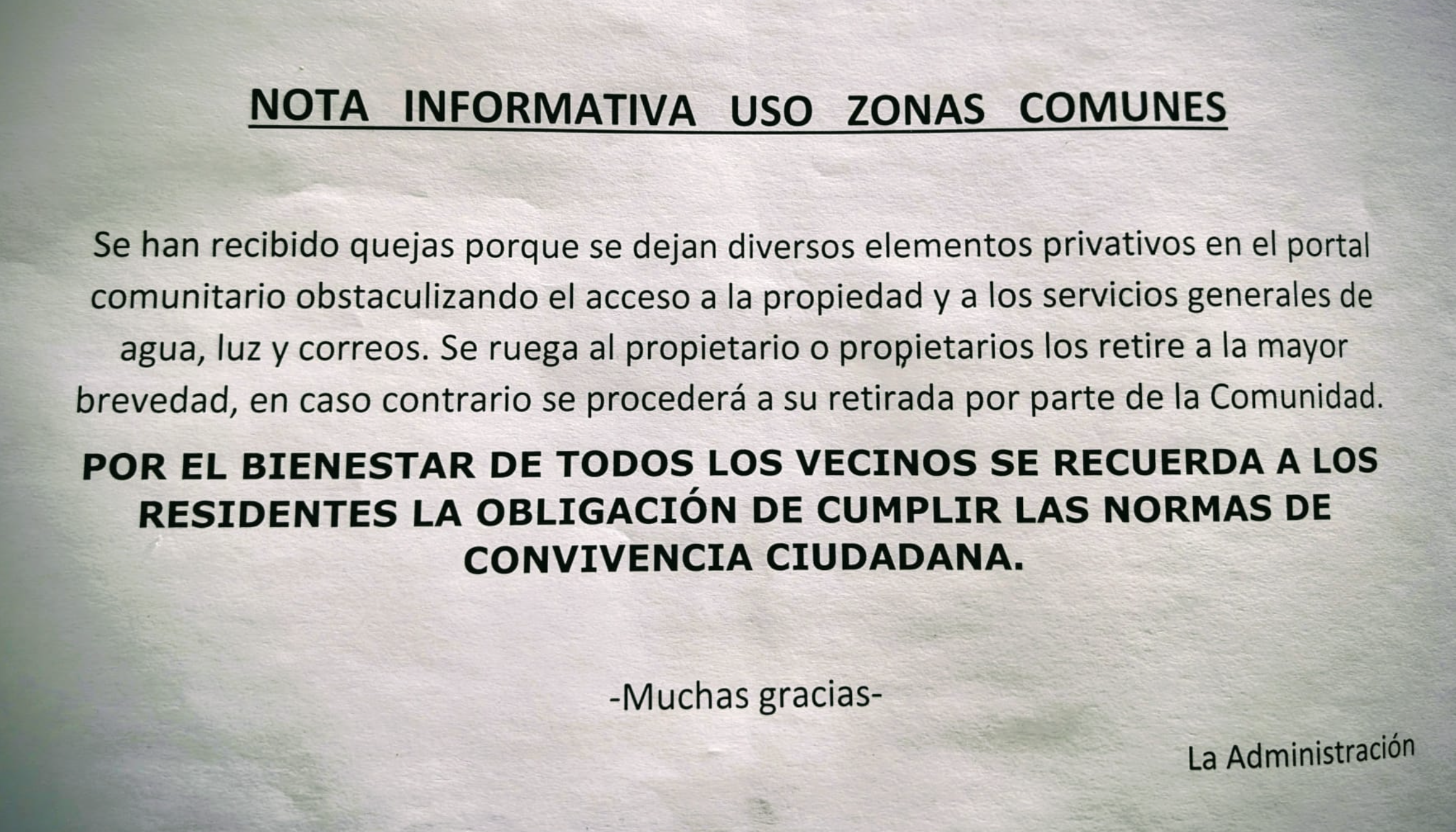
No todos los vecinos están de acuerdo con las normas de la comunidad, por lo que a menudo se incumplen algunas de ellas. Esta foto, tomada en mi portal, es un ejemplo real de la falta de civismo en mi comunidad. ¿Cuál es el problema? ¿Qué regla se está incumpliendo?
Not all the neighbors agree with the community rules, so some of them are often broken. This photo, taken in my building’s entrance, is a real example of the lack of civility in my community. What is the problem? Which rule is being broken?
- En este documento hay una serie de tarjetas con diferentes situaciones. Escoge una al azar y escribe un aviso o nota informativa para los vecinos.
- Cuando termines de escribir tu nota, cuélgala en la pizarra o en el tablón de anuncios de la clase.
- Lee las notas y avisos de tus compañeros: ¿cuál te parece la más efectiva, la más educada y la más divertida?
- In this document, there is a series of cards with different situations. Choose one at random and write a notice or informative note for the neighbors.
- When you finish writing your note, hang it on the board or on the classroom noticeboard.
- Read your classmates’ notes and notices: which one do you think is the most effective, the most polite, and the most fun?
Tarea individual: LA CONVOCATORIA
Individual task: THE MEETING ANNOUNCEMENT
Imagina que eres el jefe o la jefa de escalera. Tus vecinos tienen muchas quejas y han llenado de notas el vestíbulo del edificio, lo que contribuye a crear un ambiente hostil en la comunidad. Por ello, has decidido escribir una carta formal a tus vecinos convocándolos a una reunión para tratar de solucionar los problemas de forma civilizada y dialogante.
Imagine that you are the head of the building floor. Your neighbors have many complaints and have filled the building lobby with notes, which contributes to creating a hostile atmosphere in the community. For this reason, you have decided to write a formal letter to your neighbors, calling them to a meeting to try to solve the problems in a civilized and constructive way.
De Profe a Profe:
La nota de la foto es real y el carrito de bebé lleva dos años obstaculizando el acceso a los contadores de agua y luz. De vez en cuando le acompaña un patinete eléctrico. La administración no ha retirado nada.
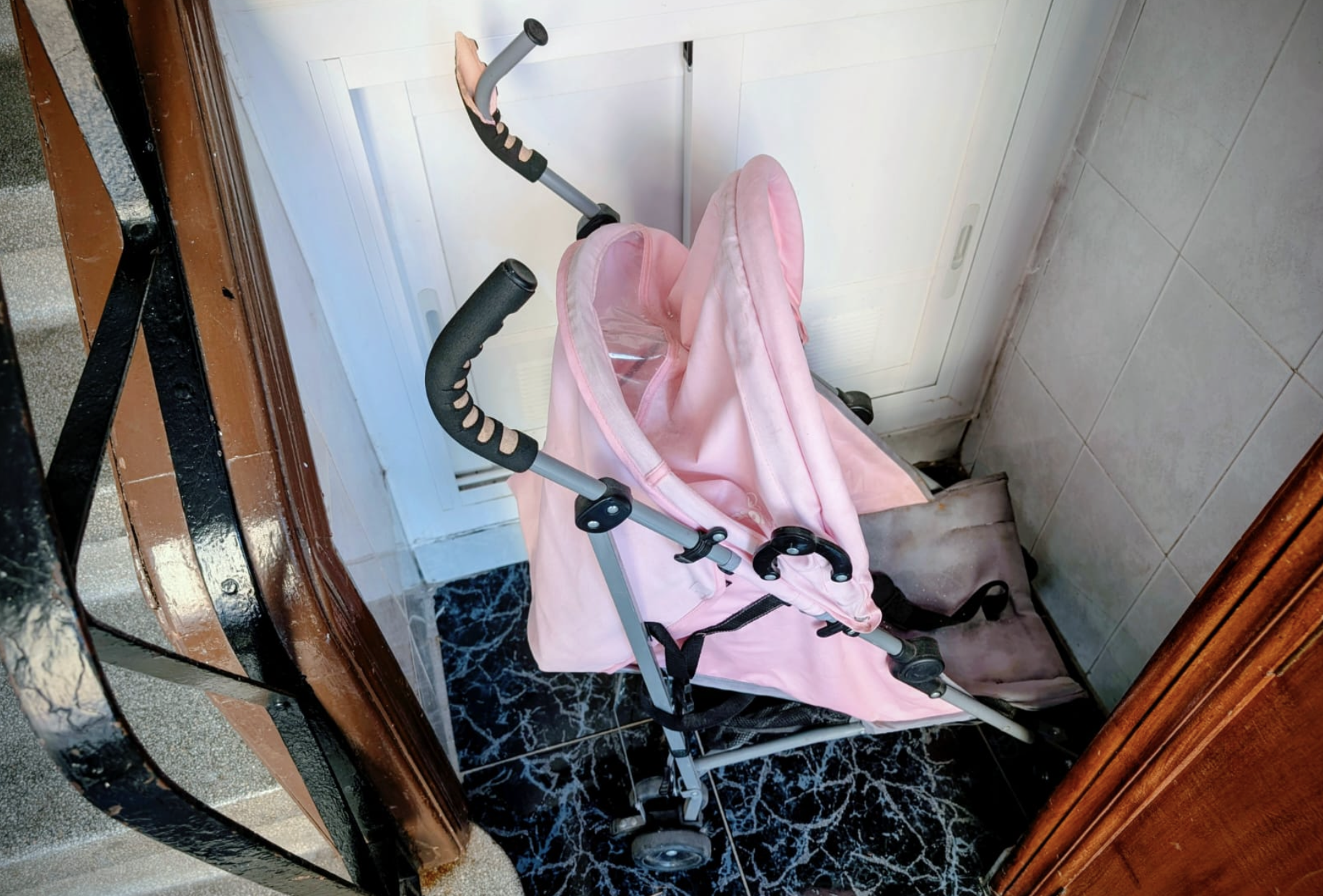
He pensado que sería divertido compartir esta información con tus estudiantes. Estoy abierta a sugerencias. Puedes pedirles que me den recomendaciones para solucionar el problema, trabajando así las estructuras de la lección - ¡imperativo, por favor! ¿Qué harían ellos en mi lugar?
Juego de rol: Imagina que hoy es el día de la junta de vecinos y que has decidido asistir para exponer tus quejas y defender tus intereses (recuerda las situaciones de la actividad anterior).
Para que la actividad sea más divertida, cada estudiante interpretará un personaje exagerado. Para meterte en la piel de tu personaje, en este documento encontrarás una descripción del mismo y de sus circunstancias personales.
Role-play: Imagine that today is the day of the homeowners’ meeting and you have decided to attend to present your complaints and defend your interests (remember the situations from the previous activity).
To make the activity more fun, each student will play an exaggerated character. To get into the skin of your character, in this document you will find a description of the character and their personal circumstances.
De Profe a Profe:
Deja un poco de tiempo para que tus alumnos preparen el juego de rol, metiéndose en la piel de su personaje. Imprime los dos documentos (situaciones y personajes) y dales tiempo para que elijan dos tarjetas coherentes que representen quiénes son y cuál es su queja.
He creado 24 tarjetas; si tu clase es más grande, pueden compartirlas: una misma situación puede afectar a varias personas, y muchas tarjetas representan a una unidad familiar.
¡No todas las relaciones entre vecinos son conflictivas o problemáticas! En ocasiones, los vecinos se reúnen para comer o tomar algo juntos, especialmente cuando hay alguna fiesta local.
Imagina que tu comunidad de vecinos tiene un grupo de chat. Con ocasión del Día Internacional de la Amistad, uno de tus vecinos ha escrito este mensaje en el grupo: ‘¡Hola, vecinos! ¿Sabíais que el 30 de julio es el Día Internacional de la Amistad? ¿Qué os parece si este año hacemos algo todos juntos para marcar la ocasión? ¿Alguna propuesta?’
Cread un Google Doc compartido e imaginad que es vuestro grupo de chat. Responded al mensaje de texto con vuestras ideas y propuestas. Ofreced y pedid ayuda. ¿Cómo vais a contribuir a organizar el evento?
Not all relationships between neighbors are conflictive or problematic! Sometimes, neighbors get together to eat or have a drink, especially when there is a local festival.
Imagine that your community of neighbors has a chat group. On the occasion of International Friendship Day, one of your neighbors has written this message in the group: ‘Hi, neighbors! Did you know that July 30 is International Friendship Day? What do you think if this year we do something together to mark the occasion? Any suggestions?’
Create a shared Google Doc and imagine it is your chat group. Reply to the text message with your ideas and proposals. Offer and ask for help. How will you contribute to organizing the event?
Tarea individual: LA INVITACIÓN
Individual task: THE INVITATION
Ahora que ya habéis decidido cómo vais a celebrar el Día de la Amistad entre vecinos, escribe una invitación para la fiesta.
Now that you have decided how you are going to celebrate Neighborhood Friendship Day, write an invitation for the party.