1. Los medios de transporte
4. Viajando por agua y aire
Lluvia de ideas: Repaso
Brainstorm: Revision
¿Cuántas palabras relacionadas con los medios de transporte acuáticos y aéreos puedes nombrar en español?

How many words related to water and air transportation can you name in Spanish?
Para ampliar tu vocabulario sobre transportes acuáticos y aéreos, mira el vídeo de Tu Escuela de Español y toma nota de las palabras nuevas que te parezcan más importantes o útiles.
To expand your vocabulary on water and air transportation, watch the video from Tu Escuela de Español and take note of the new words that seem most important or useful to you.
CAS: Ideas para Creatividad
Ideas for CAS (Creativity)
Asociar visualmente una palabra española con una palabra parecida en tu idioma de referencia puede ayudarte a memorizar vocabulario. Aquí tienes dos ejemplos de pósteres en torno a la palabra "globo", con sus dos acepciones, producidos por alumnos para una exposición de CAS.
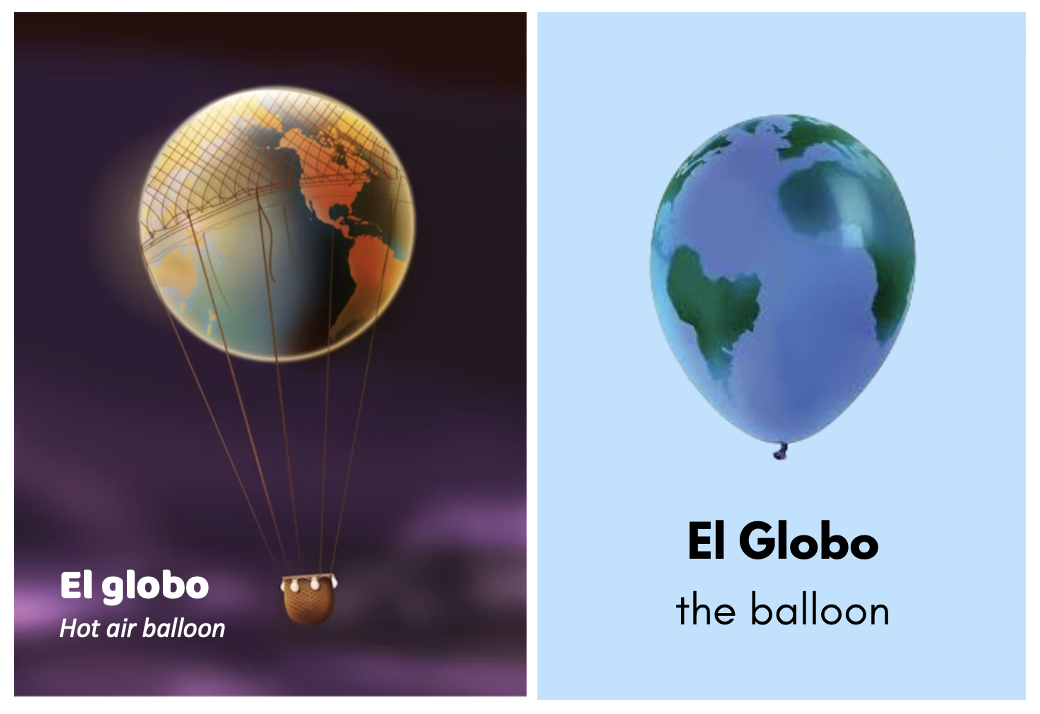
Visually associating a Spanish word with a similar word in your reference language can help you memorize vocabulary. Here are two examples of posters related to the word 'globo,' showing its two meanings, produced by students for a CAS exhibition.
Pretérito Perfecto Compuesto vs Pretérito Perfecto Simple
Present Perfect vs Simple Past
In Spanish, as in English, to talk about life experiences—the things we have done and those we haven’t—we use perfect tenses.However, as soon as we mention the specific point in time when the experience took place, we must use the simple past, since the action is tied to that particular moment in the past.
| Perfect tense | Past tense |
|---|---|
|
¿Has montado en globo alguna vez? Have you ever ridden in a hot air balloon? |
Sí, el año pasado monté en un globo. Yes, last year I rode in a hot air balloon. |
|
Yo he hecho un crucero, ¿y tú? I've been on a cruise, how about you? |
Yo también. El verano pasado hice un crucero por el Mediterráneo. Me too. Last summer, I went on a cruise in the Mediterranean. |
|
Yo nunca he estado en un submarino, ¿y tú? I've never been in a submarine, how about you? |
Pues yo sí. En febrero estuve en el submarino Growler, en Nueva York. I have. In February, I visited the Growler submarine in New York. |
|
¿Alguna vez has viajado en helicóptero? Have you ever traveled by helicopter? |
Sí, hace dos años viajé en helicóptero para visitar el glaciar Perito Moreno. Yes, two years ago I traveled in a helicopter to visit the Perito Moreno Glacier. |
This video by Linguriosa explains very clearly, albeit in Spanish, the difference between these two past tenses.
Trabajo en pareja: Habla
Work in pairs: Speak
¿Alguna vez has viajado en algún medio de transporte original o poco común?
- En una hoja, dibuja tres columnas y escribe en ellas: 1. Los medios de transporte en los que ya has subido; 2. Los medios de transporte en que todavía no has usado, pero que te gustaría experimentar algún día; 3. Los medios de transporte en los que no has viajado y que no te gustaría probar.
- En pareja, haceos preguntas sobre vuestras experiencias con diferentes medios de transporte. Usa los ejemplos del cuadro arriba como modelos.
- Si necesitas repasar el pretérito perfecto compuesto, vuelve a ver este vídeo de VideoEle.
Have you ever traveled in any original or uncommon means of transportation?
- On a sheet of paper, draw three columns and write in them: 1. The means of transportation you have already used; 2. The means of transportation you haven’t used yet, but would like to try someday; 3. The means of transportation you haven’t traveled in and wouldn't like to try.
- In pairs, ask each other questions about your experiences with different means of transportation. Use the examples from the chart above as models.
- If you need to review the present perfect tense, watch this video from VideoEle again.
De Profe a Profe:
Si alguna vez te has preguntado por qué al pretérito perfecto simple le llamamos pretérito indefinido, a pesar de que la acción tenga lugar en un tiempo definido (ayer, la semana pasada, en 1992, el 6 de abril...), este vídeo de Linguriosa te puede interesar.